The Truth About Kegels: What to Know Before You Squeeze
If you’ve ever Googled “pelvic floor problems,” or seen an influencer talk about the pelvic floor on social media, you’ve probably seen one message loud and clear: Do more Kegels. But what if I told you that Kegels aren’t the magic fix they’re made out to be—and for many people, they can actually make symptoms worse? Whether you’re dealing with leaking, heaviness, pelvic pain, or tension from scoliosis or posture changes, “squeezing more” is hardly ever the solution. Sometimes your pelvic floor needs something completely different, and knowing why is the key to finally seeing the results.
What are kegels?
In case you’ve never heard of them, kegels are shorthand for repetitive pelvic floor muscle contractions. They were named after Dr. Arnold Kegel, who was an American gynecologist who routinely recommended these exercises to women early postpartum. They were intended for people who had recently undergone significant pelvic floor trauma or stress who needed to work on strengthening the muscles back up again. That said, somewhere along the way, people started recommending everyone do kegels as a band-aid solution for all pelvic floor dysfunction. However, when used out of context they can actually create more harm than they solve.
As a pelvic health specialist and physical therapist for over a decade, I’ve treated hundreds of people and I’m here to offer you some expert advice. Click here to read why I’m uniquely positioned to teach this to you, in case you haven’t met me yet.
Quick glossary of terms
Pelvic floor overactivity — the phenomenon where the pelvic muscles tend to be “on” all the time, with difficulty relaxing or releasing even at rest
Increased muscle tension — when muscles are holding more work or activity at rest
Diaphragmatic breathing — the state of breathing in which our ribs expand in 360 degrees and the muscles of the core lengthen and return to rest in conjunction with the breath
Core canister — the muscles that make up the top, bottom and sides of what we understand as our “core muscles” (read this blog to learn more about them)
And with that, a quick disclaimer that this blog is solely for your information from an expert in scoliosis, spinal fusion and pelvic health; therefore this blog and all the information contained within it can not serve as medical advice. Remember each person will have different circumstances and you should discuss your own with your personal medical & wellness team, or you can book a consult with me for my expert opinion.
To be honest, I give traditional kegels to fewer than 10% of the people I see in person and virtually on any given day. If the person in front of me is truly dealing with a weak pelvic floor as a result of a recent surgery or recovering from childbirth, their exercise routine will be the closest to what most people think of as Kegels. Even then, however, I tend to be very specific on how they're doing them, how they integrate that pelvic floor contraction into their movements, and making sure they're not overdoing them.
So why aren’t kegels the answer? Let’s dive into what your pelvic floor actually needs.
Why kegels don’t work for everyone
Most people who come in to see me for issues like leaking, chronic low back or genital pain, or sexual dysfunction (yes, pelvic therapy can treat that too!) actually are at risk of worsening their symptoms by doing traditional kegels. For so many of them, they tend to have overactive - or overly tense - pelvic floor muscles, and doing kegels actually increases that tension and likely their pain or leaking. For that group of people, their treatment is more focused on restoring normal muscular tension and the movement that should be happening with their breathing and core engagement.
Some other reasons why kegels aren’t the right answer:
They may have weaknesses in their hips or core muscles that are worsening the tension or pressure on the pelvic floor muscles, and if so, their exercise routine would also have more traditional strengthening exercises like glute or hip strengthening.
They may have regions of scar tissue tightness creating pulling or tension on the pelvic floor muscles, so their routine would include some self-massage or fascial work.
Because of the nuance surrounding this topic, I spend most of my day telling the people in front of me that Kegels were intended for the smallest subset of people for a very particular issue (straight pelvic floor muscle weakness), and that "squeeze all day" mentality will likely cause far more issues than it solves.
What a balanced pelvic floor looks like
I like to tell people that when the pelvic floor is working optimally, you won't even realize it's there! When the pelvic floor is working in concert with the other muscles in the core, we should be able to:
Hold our pee and poop until we choose to expel them
Do all types of movements (including running, lifting weights, jumping or sneezing) without leaking or pelvic pain
Enjoy pain-free intimacy with climax
When working optimally, the pelvic floor is strong throughout its whole range of motion, it can contract and relax equally and without much effort, and it is able to adapt to whatever demands you place on your body. It's equal parts strength, coordination, adaptability, and relaxation.
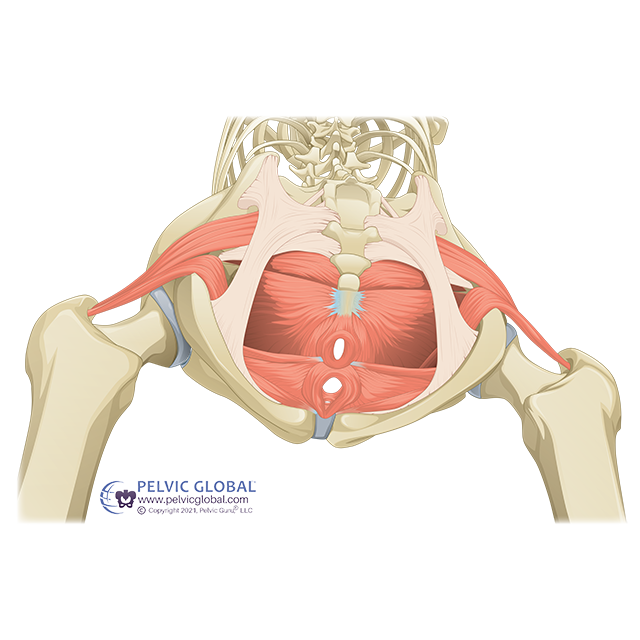
Here’s an illustration of what the pelvic floor muscles would look like from below (skin removed, looking up at someone’s pelvis).
Common mistakes when doing kegels: signs your pelvic floor is overly tight, not weak
Most often, people are somewhat disconnected from their pelvic floor and what the contractions actually feel like. Many people tend to recruit all sorts of bigger muscles, namely the glute muscles, to create that lift. I normally have people try to do the pelvic floor contractions in a reduced gravity position first, such as lying on their back or side, and pay attention to what muscles are doing the job.
Typically people don't even realize they're using other muscles, like the glutes, abs or jaw until someone points it out to them! That's one main reason why I recommend working with a trained professional if you're having any issues "down there".
Why “just doing kegels” can backfire
Research from 2001 tells us that the pelvic floor muscles are particularly vulnerable to our "fight or flight" response, which is one reason why many people develop pelvic pain or chronic tension following an unpleasant medical procedure or trauma surrounding the pelvis. If your nervous system is in a heightened state, chances are your pelvic floor muscles are already overly tense and have difficulty relaxing or contracting the way they were designed. "Just doing more Kegels" actually increases the tension and overwork happening in the pelvis, usually leading to an increase in the pain or whatever symptoms that you may be trying to combat.
What social media often misses
It's important to remember that the pelvic floor muscles are a part of an intricate and dynamic system that provides us support, strength and mobility. In case you haven’t read it yet, this blog dives into the system that the pelvic floor operates within. Before I even assess someone's pelvic floor muscles, I'm looking at their posture (sitting and standing), their gait, how they hold themselves, some basic movements such as squats and single leg balance, and how they manage pressures - like lifting a weight. TikTok and Instagram never show that whole body assessment - but it is vital to understand what's causing the pelvic issues to begin with.
Once I have an idea of how their pelvic floor is working (or the weaknesses that may be happening), I will:
Assess the pelvic floor muscles, externally or internally using a gloved finger with lubricant intra-vaginally or intra-rectally
Have them breathe, bear down, cough, and do a pelvic floor muscle contraction.
This helps create a full picture of how someone's pelvic floor is responding (or not responding) to certain stressors, its ability to contract and relax fully, and if both sides are working the same. Having difficulty in any of these areas can lead to pelvic floor issues such as leaking, pelvic pain, urgency or constipation.
For most people, their first exercise actually is learning how to allow their pelvic floor muscles to gently expand with their breath, and contract with their breath. Their exercise may include doing gentle pelvic floor contractions without gravity (so lying down), or they may progress to doing contractions in a more functional upright position like sitting or standing.
On hypermobility and the pelvic floor
If you are on the spectrum of generalized joint hypermobility or have any form of Ehler’s Danlos Syndrome (EDS), you are already prone to having overactive pelvic floor muscles. You would likely fall in the group which would have more symptoms doing a kegel program, unless you are working with a trained professional familiar with hypermobility. Read more about it in this blog for more insight on how hypermobility affects your pelvic floor.
On managing symptoms with a spinal condition
People who are dealing with conditions such as scoliosis or spinal fusion who also have pelvic floor-related symptoms should look for people with specialized training. Scoliosis is highly individualized; no two people with scoliosis have the same curvature or the same issues related to their condition. Because of this, ideally working with someone (in person or virtually) will provide results the quickest. It's very rare to find a specialist who's trained in both (though we do exist!). For some people with scoliosis, learning how to strengthen and stabilize their spine for their scoliosis curve will actually help alleviate some of their pelvic concerns as that imbalance begins to lessen.
Pay attention to longer form content; other entries within this very blog discuss all things pelvic floor, scoliosis and spinal fusion, as well as the many conditions that can impact us such as hypermobility, aging and stages of life like pregnancy and postpartum. Short form social media content, like TikTok and Instagram, are great for raising awareness, but usually don't allow much room for describing a very complex and nuanced topic. Read more about the impacts of scoliosis on the pelvic floor, how spinal fusion affects the pelvic floor, and supporting your pelvic floor with both if you’re interested!
There are podcasts now specifically for those of us with scoliosis that also discuss the complexities of dealing with things like pelvic concerns, including mine.
Red flags to look out for when doing kegels
If someone decides to follow a general Kegel tutorial, I'd ask them to first be curious as to why they are pursuing it to begin with. The big red flags I'd have them pay attention to include: change in urgency or frequency to pee, burning with peeing (usually related to pelvic floor muscle tightness), difficulty passing a bowel movement, feeling of a foreign object like a golf ball or tampon in the pelvis, increased tension or onset of pelvic pain.
Those are all signs that we've created too much tension or overactivity in the pelvic floor muscles. If that's the case, seek out a pelvic specialist like a PT/ physiotherapist or OT trained in assessing and treating pelvic floor concerns. There are online directories that can help someone locate a local pelvic health specialist or many people (like myself) also evaluate you virtually from around the world. Thanks to the internet, pelvic healthcare has never been more accessible!
If I could rewrite social media content on kegels…
Our bodies are beautifully designed and complex, and the pelvic floor can sometimes be the canary in the coal mine when we're experiencing issues. That said, traditional Kegels won't solve the issue unless we are truly experiencing pelvic floor weakness and no deficits in the surrounding muscles or how we're managing pressures. More often, there's more than one cause of any pelvic issue, and if you're having a hard time it's best to seek help from a professional sooner rather than later to fix issues in a timely fashion - before anything gets too chronic (or painful!) and treatment takes longer to resolve the problem.
Pelvic floor muscle strength is important for so many things, but equally important is its ability to stretch and adapt, coordinating with the other muscles and move through a full range of motion. Learning how to allow the muscles to move up and down with the breath, coordinate with the core muscles and prioritize full body stability and strength will be much more helpful for your pelvic floor than any DIY Kegel program could ever be!
Alternatives to kegels: exploring breath and movement
If you’re experiencing issues and unable to see a specialist at this time, I’d much rather you focus on finding pelvic floor movement and contraction in concert with your breath than follow a traditional kegel exercise routine. Here’s how to coordinate :
Start in a supported position, either on your back, your side or child’s pose with pillows supporting your hips and knees.
Focus on finding a deep breath, feeling your lower ribs open in all directions. Allow your belly to be soft and breathe deep into your pelvis (all the way into your sitz bones).
Allow the pelvic floor to relax and lengthen with your inhale as much as possible, then on the exhale gently engage your pelvic floor, lifting and squeezing as you pull your belly button toward your spine.
At the end of the contraction, let it go and allow the pelvic floor to lengthen all the way.
As you become comfortable with this movement, try to add some gentle movement like pelvic lifts, or do the same contraction with breathwork in a more upright position (like sitting or standing).
Some examples of adding the pelvic floor contraction with functional movement can look like:
Gentle pelvic tilts
Glute bridges
Bird dogs
Squats
Remember to gently engage the pelvic floor (think squeeze AND lift) with your effort, and allow it to release fully once you’re done. The range of motion, or how much the pelvic floor moves within its full limits of movement, is equally as important as the contraction itself!
To summarize…
Kegels aren’t a universal fix. For many people with pelvic floor tension, scoliosis, or muscle imbalances, they can actually worsen pelvic pain, leaking, or pressure symptoms.
A weak feeling doesn’t always mean weakness. Many people experience pelvic floor dysfunction because the muscles are tight, overactive, or unable to relax. Those issues can manifest as urinary urgency, constipation, heaviness, and discomfort. We can also have weakness with muscle overactivity, or issues with coordination with harder.
Optimal pelvic floor function starts with balance. Strategies like pelvic floor relaxation, breath coordination, and focusing on whole-body alignment are frequently more effective than doing Kegels.
Read next:
Final thoughts…
If you’re learning that you may be struggling with pelvic floor dysfunction, or kegels aren’t for you, I am here to help! You can send me an email, or if you know you need a more individualized approach I can work with you virtually to help you get the help you need for your pelvic floor.
Hopefully now you can appreciate the nuance of this topic and why kegels aren’t for everyone. Now that you know, maybe you can be part of the revolution in which people learn that our pelvic floor muscles are amazing and need individualized care!