Another year of back to back educational topics all about the pelvis, and I’m once again blown away by so many of the things I learned.
In case you’re unfamiliar, PelviCon is a weekend-long conference by pelvic floor therapists, for pelvic floor therapists. I have gone every year but one since it began in 2021. It’s an excellent place to hear from the top researchers in the field, spark interesting debates, and meet up with fellow pelvic providers from across the globe, from here in Atlanta to Guam!
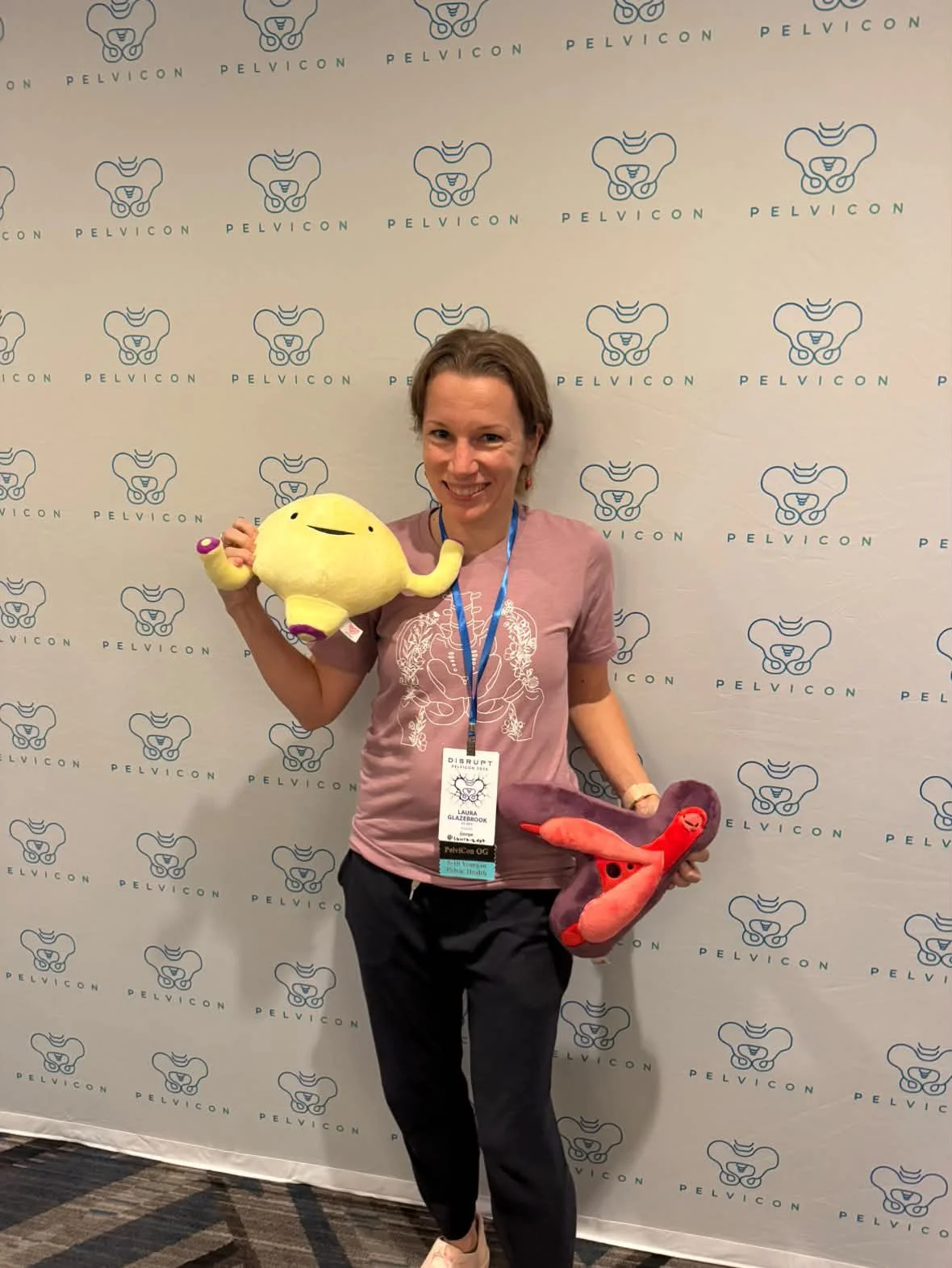
Here I am, in my element! (And yes, I am holding bladder and clitoris plushies…)
I honestly love conferences like this one because not only does it give me an opportunity to learn from the brightest in the field, but also I am surrounded by other like-minded professionals who love to geek out about the latest research and treatment approaches. Since I work alone in my practice and with my virtual clients, I don’t often get a chance to “talk shop” with other providers who understand my enthusiasm and passion for all things pelvis (and spine, of course)…
And who else would appreciate my flowery uterus shirt, or my vulva and clitoris earrings??
So, without further ado, here are some very brief summaries, complete with links for your review.
Read it, then tell me what you think in the comments!
Vaginal estrogen & UTI risk post-menopause
Dr. Rachel Rubin, a urologist and sexual medicine specialist, delivered a powerful message about the crucial role vaginal estrogen can make (literally life-saving) for women, particularly for women post-menopause. Women can find themselves in low- estrogen states in specific seasons of life, including while nursing a baby and post-menopause. You may not be familiar, but post-menopausal women have significantly higher risk of urinary tract infections (UTIs), the consequences of which can be fatal (think systemic infection, a.k.a. sepsis). Dr. Rubin and colleagues have spent years advocating for vaginal estrogen to decrease risk of UTIs and all-cause mortality. In fact, a 2026 study on vaginal estrogen and relationship with adverse events investigated 2 million women aging 20 to 100, and found 50% reduction in sepsis, hospital admission and death when prescribed and using vaginal estrogen!! The biggest issue is, many doctors and providers are still hesitant to prescribe it. So it's on us to ask for it! See all the studies below:
Learn:
Vaginal Estrogen Utilization Among Medicare Beneficiaries With Genitourinary Syndrome of Menopause
Vaginal Estrogen Prescription is Associated with Reduced Risk of Serious Adverse Outcomes in Women of All Age Groups with Recurrent Urinary Tract Infection: An Epic Cosmos Database Analysis *the study I mentioned above!
Listen:
Pelvic therapy through cancer treatment
Michelle Lyons is a powerhouse of a physio based in Ireland who had two separate topics, the first being how pelvic rehab fits into cancer treatment. Currently most cancer physicians aren't recommending their patients to physical therapy during or after treatment. That said, there are a number of things PT can help with, particularly with pain management, building up activity tolerance and stamina as well as sexual health. (Yes, we can have sexual health changes related to cancer treatment... which can be incredibly limiting.)
Oftentimes the most effective treatments are also the simplest: starting with educating on what changes can be expected or are commonly experienced during and after cancer treatment, including how sexual health can be impacted. That said, if the doctors aren’t asking the intimate questions, many people don’t know what to ask or where to begin. In many parts of the world, you can see a pelvic floor therapist without a doctor’s referral, and many of us can consult with you virtually, even if you don’t have local access to a specialist!
The studies Lyons cited:
————————-
Chronic low back pain & the pelvic floor
Lyons also spoke about lower back pain as it relates to the pelvic floor and how pelvic floor specialists can help women to get the well-rounded approach they actually need. For instance, chronic low back pain is often a confluence of many different factors, including but not limited to:
Constipation
Hormonal changes, during normal menstrual periods and also post-menopause
Systemic impacts like stress, movement (or lack of) and nutrition
As usual, she brought the research to us about how our gut microbiome and how we sleep can be related to chronic low back pain… even without actual structural damage! On this, the evidence is clear: our treatment of chronic low back pain is incomplete if it only includes assessing the structures and mechanics of the body; we are missing the mark if we don’t assess the person as a whole.
Some of her quoted studies here:
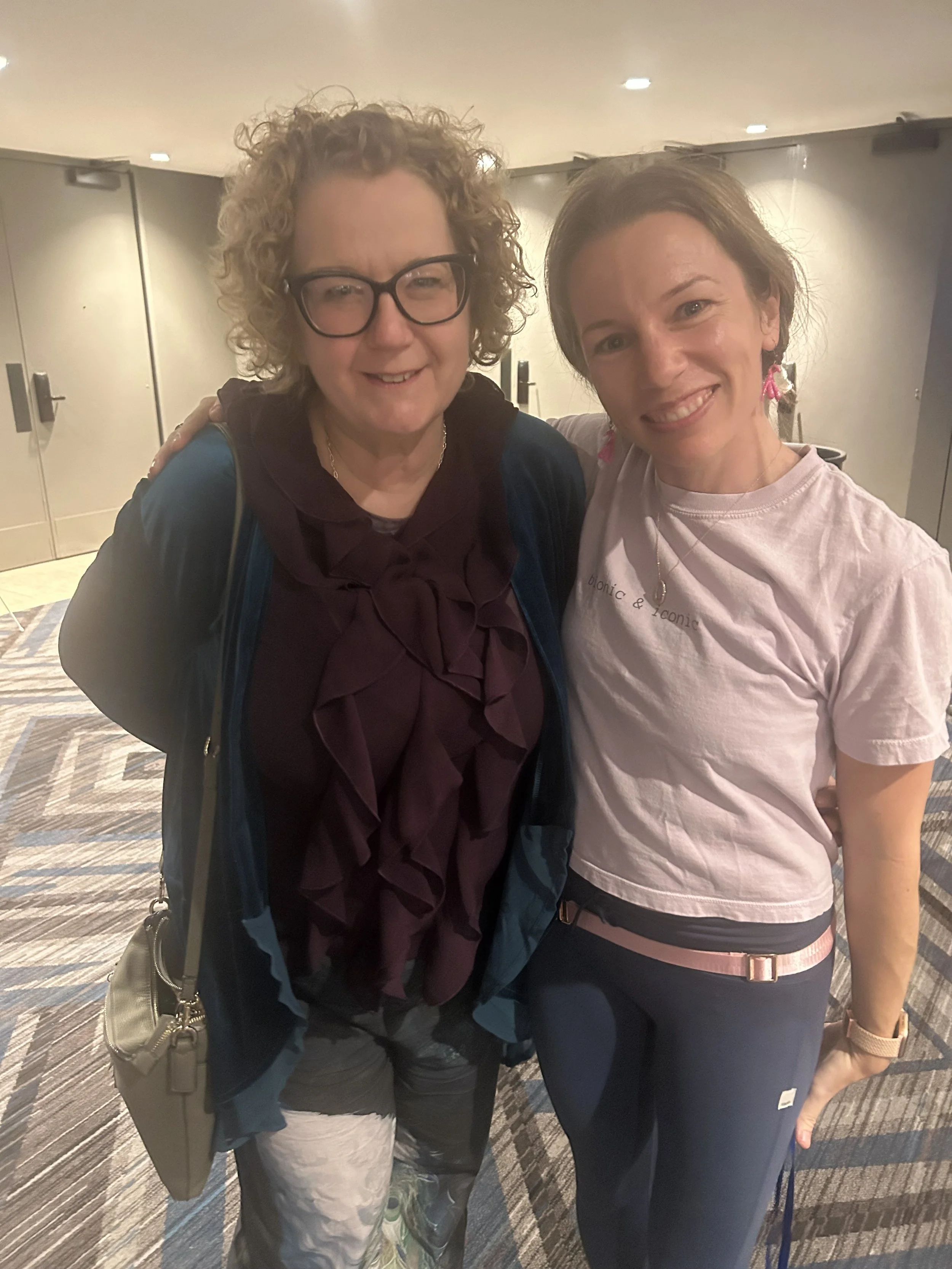
Here I am with the legendary Michelle Lyons! I am a huge fan of hers, and am completing her female hormonal health masterclass…
Early postpartum pelvic floor recovery
Taryn Hallam is an Australian physio who's another champion of distilling down what the research truly says in the women's health space. She spoke about birth injury and early postpartum recovery. Based on the data, even women who experience the most severe birth injury (known as a levator ani avulsion -- where part of the pelvic floor muscle detaches from the pubic bone or other attachment point) can experience spontaneous healing within 3 years. According to the research she cited, up to 53% experienced healing without intervention!
With that in mind, she wondered if more traditional pelvic floor postpartum rehab is focusing on the right thing. Perhaps, if there's spontaneous healing going on, we should be focusing more on rest, compression within the pelvic floor and allowing the natural healing to occur for the first 3 months without prescribing series of pelvic floor muscle contractions (which is the typical response). Perhaps the best role of pelvic therapy early postpartum is educating on typical postpartum recovery, managing constipation and strain on the pelvic floor to allow for optimal healing, and perineal support and splinting.
Read more:
Male pelvic rehab post-prostatectomy
Paul Hodges is another Australian physio who spoke specifically on the male pelvic floor, what the research tells us about how it works and the impact of prostate surgery. Up to 1 in 4 men will develop prostate cancer during their lifetime, and its primary treatment is removal of the prostate. For many men, that procedure can impact their ability to hold their urine and also impact sexual function. Many of these men will be referred to pelvic therapy post-prostatectomy for rehab, but the research is showing that we need to target the muscles differently to optimize the function and coordination of the male pelvic floor. Specifically, many PTs focus on the sphincter muscle alone, while other muscles within the pelvic floor are playing a role during certain activities, like a cough or movement. He suggests considering using ultrasound imaging during rehab to ensure the right pelvic floor muscles are contracting. That said, many PT practices don't have an ultrasound unit, but what they can do is add more variety and nuance to the exercise program. For example: can we cue differently? can we try different types of challenges? how do we incorporate the pelvic floor into other tasks, like lifting or coughing/ sneezing?
Check out his paper below:
Pelvic compression for leaking & heaviness
Gráinne Donnelly is an Irish physio who spoke at length about compression for the pelvic floor, when it's indicated and what the research says. Studies show that women who leak experience fewer episodes of leaking when wearing compression garments. What we know is the impact of walking and running can create a lot of movement within the pelvis and a feeling of instability for many women, particularly during pregnancy or later in life when the anatomical position of many organs has changed. Donnelly and her colleagues investigated this during running intervals, and found that compression can be a good tool in conjunction with other strategies, like pelvic floor muscle training and pessaries. In other words, compression garments can "lighten the load" and decrease some of the symptoms of heaviness and even leaking, but as usual, more research is needed.
The link to her study and others she mentioned:
————————-
Latest research on diastasis recti
Later Donnelly broke down the current evidence in diastasis, what it actually means for women who experience it and how we currently treat it. If you’re unfamiliar with diastasis, it is the common condition where the “six pack” muscle separates during pregnancy, leaving a gap between the muscles that can lead to a bulging appearance of the abdomen and occasionally bothersome symptoms like bloating and abdominal or back pain. Read more about it on the Cleveland Clinic website.
The short answer is, we need more evidence on the best types of exercise to heal the abdominal wall and improve its function after pregnancy and delivery, but there are some misconceptions about how to safely load the abdominal wall and exercise well with a diastasis. For instance, not too long ago PTs and physios were telling their patients and clients to be careful during certain exercises to avoid doming, which is a bulging of the abdominal wall between the separated muscles. This inadvertently led to many women becoming fearful of certain types of exercise, namely core exercises like crunches and sit-ups. More recently, researchers are finding that we don’t necessarily need to avoid full categories of exercises, but we do need to be familiar with the individual in front of us, how their abdomen responds to increased load and how they are impacted by the condition.
"Can I do crunches & sit ups with diastasis?" -- The answer is, it depends! |
"Can I do crunches & sit ups with diastasis?" -- The answer is, it depends! |
One other bombshell from Donnelly was the often negative impact of social media: up to 61% of social media posts about diastasis were not supported by evidence. This is an incredibly important point, particularly now when many people rely on education and advice from health and movement professionals on social media. My personal advice? Before accepting advice from someone, look into their credentials, see what they’re trying to sell you, and avoid anything that feels like a fear-based marketing strategy.
If you’re looking for health pros who can be trusted with your abdomen, I rely on Gráinne Donnelly and Antony Lo, as an example.
Some sources on diastasis Donnelly cited:
Endometriosis & pelvic floor rehab updates
Amy Stein is a physical therapist based in New York City who is a published author and expert in endometriosis who provided updates on the state of endometriosis and treatment strategies. In case you haven't heard of it, endometriosis is a disease in which endometrial tissue, or the tissue normally present in the uterus, implants in tissues all around the body. During the menstrual cycle, that tissue will also swell and bleed as estrogen and progesterone fluctuate. That causes widespread inflammation throughout the body and often pain associated with normal hormonal changes that happen each month. Overall, endometriosis is under-diagnosed and women's pain is dismissed by many medical providers, resulting in almost 10 year delay in getting diagnosed.
As a part of the International Endometriosis Working Group, Stein and colleagues have found a large overlap of endometriosis diagnosis with multiple autoimmune conditions such as multiple sclerosis (MS), rheumatoid arthritis, Hashimoto’s (thyroid disease), and others. In fact, research suggests that endometriosis actually impacts just about every system in the body, including digestion, blood vessels, and even nerve function. Endometriosis can profoundly impact the pelvic floor, leading to pain, as well as bowel and bladder issues. Stein urges pelvic floor therapists to become familiar with all the places someone with endometriosis may experience pain, including the abdominal wall, the low back, the thigh and down the leg.
In the second portion of her presentation, she discussed how pelvic floor specialists can provide the best support before and after excision surgery. There are many areas where someone’s pain may be coming from, including the muscles and fascia surrounding areas from the back, to the abdomen, into the pelvis. A therapist with the right training can assess the movement and mobility of the spinal segments as well as the tissues that are commonly impacted by endometriosis, and provide you some gentle release strategies or exercises to relieve your pain.
Some resources Stein recommends:
Maternal health & pregnancy-related complications
This speaker was newer to me, her name is Katherine Sylvester and she spoke about maternal health. For those of us in the U.S. we face extraordinarily high rates of maternal morbidity and mortality (a.k.a. developing sickness, chronic disease or dying as a result of pregnancy and childbirth). Quoting the Centers for Disease Control, she cites that up to 84% of pregnancy related deaths could be prevented with the right monitoring for certain risk factors and health changes.
Certain conditions that develop during or shortly after pregnancy can be incredibly dangerous or fatal, including:
Preeclampsia
Postpartum hemorrhage
Infection
Blood clots
Heart failure, which can occur up to 5 years postpartum
After her own life-altering experience with illness postpartum, she created a virtual monitoring service that tracks vital signs like heart rate, sleep quantity and quality, blood pressure and other biometric data points for moms and moms-to-be enrolled in her program. She advocates for improved access to both information and monitoring services for our community, particularly those at higher risk of pregnancy-related complications. Unfortunately she didn’t list her sources so I can’t leave the study links for you, but I am linking some pertinent articles I found on the CDC website regarding disparities in pregnancy-related deaths, as well as mental health during pregnancy and postpartum.
These are just the highlights, and a handful of conversations worth having with your medical team to help get you the best care possible.
In this recap, I shared the pelvic health research that stood out most at PelviCon 2026, from life-saving vaginal estrogen, to male pelvic health rehab, to groundbreaking updates on postpartum recovery and diastasis. If something here sparked a question about your own body, I’d love to be on your health and wellness team. Book a virtual consult or join me in Pregnancy & Postpartum Coaching to tailor this advice to you & your situation.
As always, sending you happy spine and pelvis vibes! Until next time…